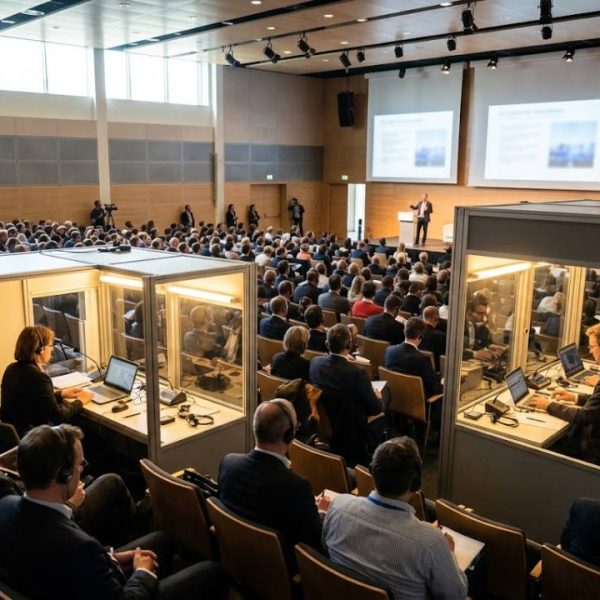
A trade delegation from Shenzhen arrives in London for a two-day investment forum. Speeches switch between Mandarin and English, panel discussions mix both languages, and networking lunches depend on people finding a common way to talk. Whether the event feels smooth or chaotic depends almost entirely on how the language side was planned.
This guide covers what organisers need to think about when running a bilingual Chinese-English business conference.
Start Planning Language Early
Language support is often added to the budget late, after the venue, catering and speakers are booked. By then, the best conference interpreters may be unavailable, and the venue may not have space for interpreting booths.
Treat language as part of the event design, not as a last-minute add-on. Decide in the first planning meeting which sessions need interpreting, which materials need translating and who will coordinate it all.
Simultaneous or Consecutive
For keynote speeches and panel sessions, simultaneous interpreting is the standard. Interpreters work in soundproof booths and speak into microphones while delegates listen through headsets. The event runs at normal speed.
Consecutive interpreting, where the speaker pauses and the interpreter then speaks, suits smaller formats such as signing ceremonies, press briefings or meetings between two delegations. It doubles the time needed, so agendas must allow for it.
Professional interpreting services can advise on the right mix and provide both interpreters and technical equipment.
Interpreters Work in Teams
Simultaneous interpreting is mentally exhausting. Interpreters normally work in pairs per language direction and switch every 20 to 30 minutes. A full-day conference between Mandarin and English therefore needs at least two interpreters, and longer days or parallel sessions need more.
Professional associations such as AIIC describe working conditions and team sizes that help maintain quality across a long event. Following these norms is not a luxury. Tired interpreters make mistakes.
Brief the Interpreters Properly
Interpreters prepare like speakers. They need:
- the final agenda with speaker names and titles in both languages,
- slides and speech texts, even in draft form,
- company names, product names and technical terms,
- background on the event goals and key announcements.
Sending material a week in advance makes a visible difference. Chinese names in particular need checking, as the same name can be romanised in several ways.
Equipment and Venue
Simultaneous interpreting requires booths, interpreter consoles, a sound system and receivers for delegates. Many venues have built-in booths, others need portable ones. Remote simultaneous interpreting platforms are another option, with interpreters working from a hub and delegates listening on their phones.
Whatever the setup, test it the day before with the interpreters present. Feedback, poor microphones and dead receiver batteries are common and avoidable problems.
Translate the Written Materials Too
Interpreting covers the spoken word, but conferences are full of text: invitations, programmes, name badges, slides, signage, press releases and follow-up reports. Chinese delegates notice quickly if everything around them is in English only.
Using business translation services for these materials ensures that company descriptions, financial figures and job titles are rendered accurately. Job titles deserve special care, as hierarchies differ and a wrong title can cause offence.
Simplified or Traditional characters
Delegations from mainland China read Simplified Chinese. Guests from Hong Kong or Taiwan may prefer Traditional characters. If both groups attend, consider producing both versions for key documents.
Slides That Work in Two Languages
Bilingual slides help audiences follow presentations, especially numbers and technical diagrams. Keep text short, put both languages on the same slide where space allows, and ask speakers to submit slides early enough for translation and layout checks.
For event apps, websites and registration pages, localisation services adapt not only the words but also date formats, payment options and contact details so Chinese guests can register without friction.
Networking and Informal Moments
Much of the business value of a conference happens outside the main hall. Consider providing a few interpreters for networking sessions, VIP meetings and dinners. Bilingual hosts at registration also make guests feel welcome from the first minute.
Small gestures matter: name badges with names in both scripts, signage with Chinese text, and menus that explain dishes clearly.
Budgeting Realistically
Interpreting is usually charged per interpreter per day or half-day, plus equipment, travel and preparation time. Translation is charged per word, with extra for design and layout. Ask for a combined quote early, and build in a margin for last-minute speaker changes.
The cost of language support is small compared to the cost of a delegation that leaves without understanding the offer.
After the Event
Send follow-up materials in both languages: thank-you letters, presentation summaries and next steps. Recordings of interpreted sessions can be transcribed and translated into reports for participants who could not attend. This extends the value of the event well beyond the two days.
Final Thoughts
A bilingual Chinese-English conference succeeds when every guest can follow, contribute and connect without effort. With early planning, well-briefed interpreters, translated materials and attention to cultural details, organisers can turn language from a barrier into a sign of respect and professionalism.